

Introduction
Understanding essential vitamins and minerals explained in a simple way is one of the most important steps toward improving your overall health. These nutrients play a critical role in keeping your body functioning properly every single day. From supporting immunity and energy production to strengthening bones and improving brain function, vitamins and minerals are essential for survival and long-term wellness.
Many people do not realize that even a small deficiency in certain nutrients cabenefits of essential vitamins and mineralsfn affect energy levels, mood, digestion, and overall performance. While the body needs them in small amounts compared to carbohydrates, proteins, and fats, their impact is extremely powerful. Without adequate vitamins and minerals, the body cannot function efficiently, even if calorie intake is sufficient.
A balanced diet is the best way to obtain these nutrients naturally. Foods such as fruits, vegetables, whole grains, dairy products, nuts, seeds, and lean proteins provide a wide range of essential micronutrients that support overall health.
This guide on essential vitamins and minerals explained is designed for beginners and intermediate readers who want to understand what these nutrients do, why they matter, and how to include them in daily meals. By the end, you will have a clear understanding of how vitamins and minerals support your body and how simple dietary changes can improve your long-term health.
What Are Essential Vitamins and Minerals Explained?

Essential vitamins and minerals are micronutrients that the body needs in small amounts to function properly. Unlike macronutrients such as carbohydrates, proteins, and fats, they do not provide energy directly but support many vital biological processes.
Vitamins are organic compounds, meaning they come from plants and animals. Minerals are inorganic elements that come from soil and water and are absorbed by plants or animals.
Together, they help regulate essential body functions, including:
- Energy production.
- Immune system support.
- Bone and teeth strength.
- Nerve function.
- Muscle contraction.
- Wound healing.
- Blood formation.
There are two main types of vitamins:
- Water-soluble vitamins (such as Vitamin C and B-complex vitamins), which need regular intake.
- Fat-soluble vitamins (such as Vitamins A, D, E, and K), which are stored in the body.
Minerals are divided into:
- Macrominerals (needed in larger amounts), such as calcium, potassium, and magnesium.
- Trace minerals (needed in smaller amounts), such as iron, zinc, and iodine.
Each vitamin and mineral plays a unique role in maintaining health and preventing deficiencies.
Why Are Essential Vitamins and Minerals Important?

Vitamins and minerals are crucial because they support nearly every function in the human body.
They help convert food into energy, allowing the body to perform daily activities efficiently. Without them, fatigue and weakness may occur even with adequate calorie intake.
These nutrients also strengthen the immune system, helping the body fight infections and recover faster from illness.
Bone health depends heavily on minerals like calcium and phosphorus, along with Vitamin D, which supports calcium absorption.
Brain function and mental health are also influenced by nutrients such as B vitamins, magnesium, and iron. A deficiency in these can lead to poor concentration, mood changes, and low energy.
Additionally, vitamins and minerals support skin health, hormone balance, and proper heart function.
A lack of these nutrients over time can lead to deficiencies, which may cause serious health problems if not addressed early through diet or supplementation.
Step-by-Step Guide to Getting Essential Vitamins and Minerals
Step 1: Eat a Variety of Foods
The simplest way to ensure adequate nutrient intake is by eating a wide variety of foods.
Include:
- Fruits and vegetables of different colors.
- Whole grains like oats and brown rice.
- Lean proteins such as chicken, fish, and eggs.
- Dairy products or alternatives.
- Nuts and seeds.
Different foods provide different nutrients, so variety is key.
Step 2: Focus on Colorful Fruits and Vegetables
Colorful produce is rich in vitamins, minerals, and antioxidants.
Examples include:
- Orange foods for Vitamin A.
- Green vegetables for iron and folate.
- Citrus fruits for Vitamin C.
- Berries for antioxidants.
Eating a “rainbow diet” helps ensure better nutrient coverage.
Step 3: Include Protein-Rich Foods
Protein sources often contain important minerals such as iron, zinc, and magnesium.
Healthy options include:
- Fish.
- Chicken.
- Eggs.
- Beans.
- Lentils.
- Dairy products.
These foods also support muscle growth and repair.
Step 4: Add Healthy Fats
Healthy fats help absorb fat-soluble vitamins (A, D, E, and K).
Include:
- Olive oil.
- Avocados.
- Nuts.
- Seeds.
- Fatty fish.
Without healthy fats, the body cannot properly absorb certain vitamins.
Step 5: Stay Hydrated
Water supports the transportation and absorption of nutrients throughout the body.
Healthy hydration habits include:
- Drinking water throughout the day.
- Reducing sugary drinks.
- Eating water-rich foods like fruits and vegetables.
Proper hydration improves nutrient efficiency and overall health.
Step 6: Understand Key Vitamins and Their Roles
To truly understand essential vitamins and minerals explained, it helps to know what each major vitamin does in the body.
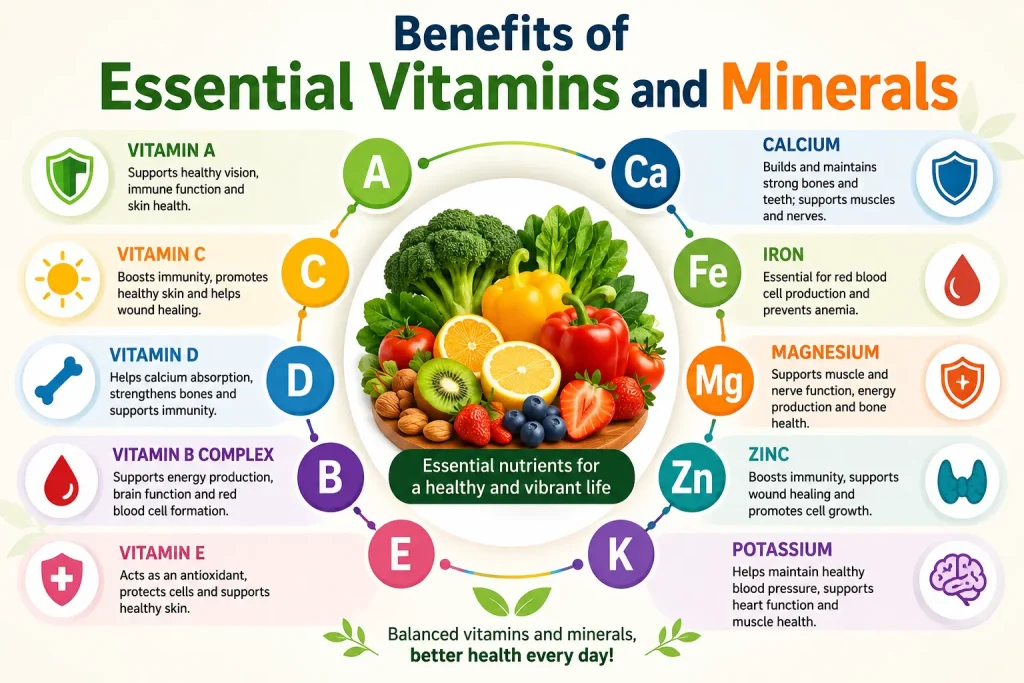
Vitamin A supports vision, skin health, and immune function. It is commonly found in carrots, sweet potatoes, spinach, and dairy products.
Vitamin B-complex includes several vitamins such as B1, B2, B3, B6, and B12. These help convert food into energy, support brain function, and maintain healthy red blood cells.
Vitamin C is important for immunity, skin repair, and antioxidant protection. Citrus fruits, strawberries, and bell peppers are rich sources.
Vitamin D supports bone health by helping the body absorb calcium. Sunlight exposure and foods like eggs and fatty fish provide Vitamin D.
Vitamin E acts as an antioxidant, protecting cells from damage. It is found in nuts, seeds, and vegetable oils.
Vitamin K is essential for blood clotting and bone strength. Leafy green vegetables are the best sources.
Step 7: Understand Essential Minerals and Their Functions
Minerals are equally important for daily health and long-term wellness.
Calcium strengthens bones and teeth. Dairy products, leafy greens, and fortified foods are rich sources.
Iron helps transport oxygen in the blood and prevents fatigue. It is found in red meat, lentils, spinach, and beans.
Magnesium supports muscle function, nerve health, and energy production. Nuts, seeds, and whole grains are good sources.
Potassium helps regulate blood pressure and fluid balance. Bananas, potatoes, and oranges are rich in potassium.
Zinc supports immunity and wound healing. It is found in meat, seafood, and legumes.
Iodine is essential for thyroid function and metabolism. It is commonly found in iodized salt and seafood.
Step 8: Balance Your Daily Nutrition
A balanced diet is the best way to ensure proper intake of vitamins and minerals.
Try to include:
- Fruits and vegetables in every meal.
- Whole grains instead of refined grains.
- Lean protein sources regularly.
- Healthy fats in moderation.
Avoid relying heavily on processed foods, as they are often low in essential nutrients and high in unhealthy additives.
Step 9: Consider Lifestyle Factors
Your lifestyle affects how well your body absorbs and uses nutrients.
Important factors include:
- Sleep quality.
- Physical activity levels.
- Stress management.
- Sun exposure for Vitamin D.
- Hydration habits.
A healthy lifestyle enhances nutrient absorption and overall effectiveness.
Step 10: Be Aware of Deficiency Signs
Understanding deficiency symptoms helps you take action early.
Common signs include:
- Fatigue and low energy.
- Weak immunity.
- Hair loss or brittle nails.
- Muscle cramps.
- Poor concentration.
- Slow wound healing.
If symptoms persist, consulting a healthcare professional is important.
Step 11: Avoid Over-Supplementation
While supplements can help in some cases, excessive intake of vitamins and minerals can be harmful.
Possible risks include:
- Vitamin toxicity.
- Digestive issues.
- Kidney strain.
- Imbalanced nutrient absorption.
It is always better to prioritize food sources over supplements unless medically advised.
Benefits of Essential Vitamins and Minerals
A proper intake of vitamins and minerals offers numerous health benefits.
- Strengthens the immune system.
- Improves energy levels.
- Supports brain function.
- Enhances bone strength.
- Promotes healthy skin and hair.
- Aids digestion and metabolism.
- Reduces risk of chronic diseases.
- Supports heart health.
- Improves mental clarity.
- Enhances muscle performance.
- Supports hormone balance.
- Promotes faster recovery from illness.
- Helps maintain healthy weight.
- Improves overall vitality.
- Supports healthy aging.
- Boosts daily productivity.
These benefits highlight why maintaining a balanced nutrient intake is essential for long-term wellness.
Disadvantages and Risks
Although vitamins and minerals are essential, there are some risks if they are not managed properly.
- Overconsumption through supplements can lead to toxicity.
- Poor diet choices may cause nutrient deficiencies.
- Processed foods often lack essential nutrients.
- Misleading supplement marketing may cause confusion.
- Excess reliance on pills instead of food can reduce dietary balance.
- Some nutrients may interact negatively when taken in excess.
A balanced approach is always safer and more effective than extreme supplementation.
Common Mistakes to Avoid
One common mistake is assuming that a normal diet automatically provides all nutrients. Many people still experience deficiencies due to poor food choices.
Another mistake is relying too heavily on supplements instead of improving diet quality. Whole foods provide better nutrient balance and additional health benefits.
Skipping fruits and vegetables is also a major issue. These foods are the primary sources of many essential vitamins and minerals.
Ignoring hydration can reduce nutrient absorption and energy levels.
Finally, self-diagnosing deficiencies without proper testing may lead to unnecessary supplementation or incorrect treatment.
A mindful and balanced approach is key to maintaining optimal nutrient levels.
What are essential vitamins and minerals?
Essential vitamins and minerals are micronutrients that the body needs in small amounts to function properly. They support energy production, immunity, bone health, brain function, and many other vital processes. Since the body cannot produce most of them, they must come from food.
Can I get all vitamins and minerals from food alone?
Yes, most people can meet their nutrient needs through a balanced and varied diet. Eating fruits, vegetables, whole grains, lean proteins, nuts, and seeds usually provides sufficient vitamins and minerals. Supplements are only needed in specific cases advised by a healthcare professional.
What happens if I lack vitamins or minerals?
A deficiency can lead to several health issues depending on the nutrient involved. Common symptoms include fatigue, weak immunity, poor concentration, muscle cramps, hair loss, and slow healing. Long-term deficiencies may cause more serious health problems.
Are vitamin supplements necessary for everyone?
No, supplements are not necessary for everyone. They are mainly recommended for people with diagnosed deficiencies, restricted diets, or certain medical conditions. In most cases, a healthy diet is enough to meet daily nutritional needs.
Which foods are richest in essential vitamins and minerals?
Fruits, vegetables, whole grains, dairy products, eggs, fish, lean meats, legumes, nuts, and seeds are all rich sources. Eating a variety of these foods daily ensures a broad intake of essential nutrients.
Can too many vitamins or minerals be harmful?
Yes, excessive intake—especially from supplements—can be harmful. Overconsumption may lead to toxicity, digestive issues, or organ stress. It is always best to follow recommended daily amounts and prioritize natural food sources.
Expert Tips & Bonus Points
Building a nutrient-rich diet becomes easier when you focus on simple, consistent habits rather than complex rules. Small improvements over time lead to long-lasting health benefits.
Consider these expert recommendations:
- Eat a variety of colorful fruits and vegetables daily.
- Combine protein with every meal for better nutrient absorption.
- Choose whole foods instead of processed snacks.
- Get regular sunlight exposure for natural Vitamin D.
- Stay hydrated throughout the day.
- Plan meals in advance to avoid poor food choices.
- Read nutrition labels before buying packaged foods.
- Include healthy fats to improve vitamin absorption.
- Maintain regular physical activity to support metabolism.
- Focus on consistency rather than perfection.
Another helpful strategy is to “eat the rainbow,” meaning you include different colored foods in your meals. Each color represents different nutrients that support various body functions. For example, orange foods support vision, green foods support blood health, and red foods provide antioxidants.
It is also important to listen to your body. Signs like fatigue, brittle nails, or frequent illness may indicate nutrient imbalance. Instead of self-diagnosing, consult a healthcare professional for proper evaluation if symptoms persist.
Finally, remember that nutrition is a long-term commitment. You do not need to make drastic changes overnight. Gradual improvements in your daily diet are more sustainable and effective for lifelong health.
Conclusion
Understanding essential vitamins and minerals explained is a powerful step toward improving your overall health and well-being. These micronutrients may be needed in small amounts, but their impact on the body is extremely important. From supporting immunity and energy production to maintaining strong bones, healthy skin, and proper brain function, vitamins and minerals play a vital role in every aspect of life.
A balanced diet that includes a wide variety of whole foods is the most reliable way to meet your nutritional needs. Fruits, vegetables, whole grains, lean proteins, healthy fats, and adequate hydration all work together to supply the nutrients your body depends on daily. While supplements can help in specific cases, they should never replace a healthy and diverse diet.
As you apply the knowledge from this guide, focus on consistency rather than perfection. Small changes such as adding more vegetables to meals, choosing whole grains, and reducing processed foods can significantly improve nutrient intake over time. Healthy habits build gradually, and each positive choice strengthens your long-term wellness.
Ultimately, maintaining proper vitamin and mineral intake is not about strict rules but about balance and awareness. By making informed food choices and developing mindful eating habits, you can support your body’s natural functions, boost your energy, and enjoy a healthier, more active life for years to come.