

Introduction
Staying fit doesn’t always require an expensive gym membership or fancy workout machines. In fact, some of the most effective exercises rely entirely on your body weight. The best home workouts without equipment allow you to improve your strength, endurance, flexibility, and overall health from the comfort of your own home.
Whether you’re a beginner looking to start your fitness journey or someone with experience seeking a convenient workout routine, bodyweight training offers endless possibilities. You can exercise in your living room, bedroom, backyard, or even while traveling. Since no equipment is required, there are fewer excuses to skip your workouts.
One of the biggest advantages of home workouts is flexibility. You decide when and where to train, making it easier to stay consistent. Moreover, bodyweight exercises can be adjusted to suit different fitness levels, allowing gradual progress without feeling overwhelmed.
This comprehensive guide covers everything you need to know about the best home workouts without equipment, including their importance, step-by-step workout plans, benefits, common mistakes, safety tips, and frequently asked questions. By following these practical strategies, you’ll be well on your way to building a healthier, stronger, and more active lifestyle without spending money on gym equipment.
What is Best Home Workouts Without Equipment?

The best home workouts without equipment refer to exercise routines that use only your body weight to improve physical fitness. Instead of relying on dumbbells, resistance bands, or machines, these workouts focus on natural movement patterns that strengthen muscles, improve cardiovascular health, and increase flexibility.
Popular bodyweight exercises include:
- Push-ups
- Squats
- Lunges
- Planks
- Mountain climbers
- Jumping jacks
- Burpees
- Glute bridges
- High knees
- Wall sits
These exercises can be combined into complete workout routines targeting every major muscle group. Whether your goal is fat loss, muscle toning, or improved endurance, bodyweight training provides an effective solution for nearly everyone.
Why is Best Home Workouts Without Equipment Important?

Home workouts have become increasingly popular because they remove many barriers that prevent people from exercising regularly.
Here are some reasons why they are important:
- Save money by eliminating gym membership costs.
- Require very little space.
- Suitable for beginners and experienced individuals.
- Improve strength using natural body movements.
- Increase flexibility and mobility.
- Support weight management.
- Enhance cardiovascular health.
- Build long-term exercise habits.
- Offer greater scheduling flexibility.
- Reduce excuses for skipping workouts.
Most importantly, consistency matters more than expensive equipment. Performing the best home workouts without equipment regularly can produce remarkable health improvements over time.
Detailed Step-by-Step Guide
Step 1: Prepare Your Workout Space
Choose an area with enough room to move comfortably.
Make sure you have:
- Good ventilation
- Comfortable clothing
- Athletic shoes if needed
- Water bottle
- Exercise mat (optional)
A clutter-free environment helps you focus entirely on your workout.
Step 2: Warm Up Properly (5–10 Minutes)
Never skip your warm-up.
Start with:
- March in place – 2 minutes
- Arm circles – 30 seconds
- Hip rotations – 30 seconds
- Leg swings – 30 seconds
- Jumping jacks – 2 minutes
- Light jogging in place – 2 minutes
A proper warm-up increases blood flow and reduces injury risk.
Step 3: Lower Body Workout
Bodyweight Squats
How to perform:
- Stand shoulder-width apart.
- Push your hips backward.
- Lower until thighs are nearly parallel.
- Return to standing.
Recommended:
- 3 sets
- 12–15 repetitions
Benefits:
- Strengthens legs
- Improves balance
- Builds lower-body endurance
Forward Lunges
Steps:
- Take one large step forward.
- Lower both knees.
- Push back to starting position.
- Alternate legs.
Recommended:
- 3 sets
- 10 reps each leg
Glute Bridges
Instructions:
- Lie on your back.
- Bend knees.
- Lift hips upward.
- Squeeze glutes.
- Lower slowly.
Recommended:
- 3 sets
- 15 repetitions
Wall Sit
Lean against a wall and lower yourself until your knees form a 90-degree angle.
Hold for:
- 30–60 seconds
Repeat:
- 3 rounds
Step 4: Upper Body Workout
Push-Ups
Classic push-ups target:
- Chest
- Shoulders
- Triceps
- Core
Beginners can perform knee push-ups.
Recommended:
- 3 sets
- 8–15 reps
Triceps Dips (Using a Stable Chair)
Although no gym equipment is needed, a sturdy household chair works well.
Perform:
- 3 sets
- 12 reps
Pike Push-Ups
Excellent for shoulder strength.
Perform:
- 3 sets
- 8–12 reps
Step 5: Core Workout
Plank
Hold a straight-body position.
Duration:
- 30–60 seconds
Repeat:
- 3 rounds
Mountain Climbers
Maintain a plank while alternating knees quickly.
Perform:
- 30 seconds
Repeat:
- 3 sets
Bicycle Crunches
Steps:
- Lie flat.
- Alternate opposite elbow and knee.
- Move slowly with control.
Recommended:
- 20 repetitions
Leg Raises
Strengthens lower abdominal muscles.
Recommended:
- 15 repetitions
- 3 sets
Step 6: Cardio Workout
Cardio increases calorie burn and improves heart health.
Include:
Jumping Jacks
- 45 seconds
- 3 rounds
High Knees
- 30 seconds
- 4 rounds
Burpees
One of the best home workouts without equipment for full-body conditioning.
Perform:
- 10 repetitions
- 3 rounds
Skaters
Improve agility and coordination.
Perform:
- 30 seconds
- 3 rounds
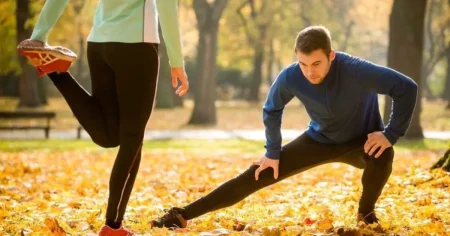
Step 7: Cool Down
Spend 5–10 minutes stretching.
Focus on:
- Hamstrings
- Calves
- Chest
- Shoulders
- Back
- Hip flexors
Cooling down helps improve flexibility and reduces muscle soreness.
Sample Weekly Workout Plan
Monday
- Full-body strength
- Core
Tuesday
- Cardio
- Stretching
Wednesday
- Lower body
- Core
Thursday
- Active recovery
Friday
- Upper body
- Cardio
Saturday
- Full-body circuit
Sunday
- Rest
Consistency delivers better results than occasional intense workouts.
Benefits of Best Home Workouts Without Equipment
Regular bodyweight workouts offer numerous physical and mental health benefits.
Physical Benefits
- Build lean muscle
- Improve posture
- Increase flexibility
- Enhance balance
- Burn calories
- Boost endurance
- Strengthen bones
- Improve joint stability
- Better cardiovascular fitness
- Increased mobility
Mental Benefits
- Reduce stress
- Improve mood
- Increase energy
- Better sleep quality
- Enhance confidence
- Improve concentration
- Support mental well-being
Lifestyle Benefits
- Save money
- Save commuting time
- Exercise anytime
- Suitable for busy schedules
- Ideal for travel
- Easy to maintain long-term
Disadvantages / Risks
Although bodyweight training is highly effective, there are a few limitations.
- Limited resistance for advanced athletes.
- Progress may slow over time.
- Incorrect technique can cause injuries.
- Small workout space may limit movement.
- Motivation can decrease without accountability.
- Poor form may reduce effectiveness.
- Overtraining without rest can delay recovery.
Fortunately, most of these challenges can be managed with proper planning and consistent practice.
Common Mistakes to Avoid
Many beginners unknowingly slow their progress by making avoidable mistakes.
1. Skipping Warm-Ups
Cold muscles are more prone to injury.
2. Using Poor Form
Quality repetitions are always better than high repetition counts.
3. Exercising Every Day Without Rest
Muscles grow during recovery.
Aim for at least one or two rest days each week.
4. Ignoring Nutrition
Exercise alone cannot compensate for poor eating habits.
Consume:
- Lean protein
- Whole grains
- Fruits
- Vegetables
- Healthy fats
5. Not Progressing
Gradually increase:
- Repetitions
- Sets
- Workout duration
- Exercise difficulty
Progressive overload helps maintain results.
6. Being Inconsistent
Working out once a week won’t deliver significant improvements.
Consistency beats perfection.
7. Forgetting Hydration
Drink water before, during, and after workouts.
8. Comparing Yourself to Others
Everyone progresses differently.
Focus on personal improvement.
FAQs
1. Are home workouts without equipment really effective?
Yes. Bodyweight exercises effectively build strength, improve cardiovascular health, burn calories, and increase flexibility when performed consistently with proper technique.
2. Can beginners start with bodyweight exercises?
Beginners often benefit the most because these exercises teach proper movement patterns before adding external weights.
3. How many days should I exercise each week?
Most people achieve excellent results by exercising 3–5 days weekly while allowing adequate recovery between sessions.
4. Can I lose weight with home workouts?
Combining the best home workouts without equipment with a balanced diet and consistent calorie management can support healthy and sustainable weight loss.
5. How long should each workout last?
Most sessions last between 30 and 45 minutes, including warm-up and cool-down.
Beginners may start with 20-minute workouts and gradually increase duration.
6. Do I need supplements?
Not necessarily.
A nutritious diet rich in protein, vegetables, whole grains, and healthy fats usually provides what your body needs. Supplements should only be considered if recommended by a healthcare professional.
Expert Tips & Bonus Points
To maximize your results, keep these expert recommendations in mind:
- Focus on proper form before increasing repetitions.
- Set realistic weekly fitness goals.
- Track your workouts in a notebook or mobile app.
- Increase intensity gradually.
- Stay hydrated throughout the day.
- Prioritize sleep for better muscle recovery.
- Include mobility exercises at least twice weekly.
- Perform compound movements for maximum efficiency.
- Listen to your body’s signals.
- Celebrate small improvements to stay motivated.
Bonus Home Workout Circuit
Perform each exercise for 40 seconds with 20 seconds of rest.
- Squats
- Push-ups
- Mountain climbers
- Lunges
- Plank
- Burpees
Complete 3–4 rounds for an effective full-body workout.
Conclusion
Improving your fitness doesn’t require expensive gym memberships, complicated machines, or specialized equipment. The best home workouts without equipment prove that your own body is one of the most powerful training tools available. By combining bodyweight exercises such as squats, push-ups, lunges, planks, and cardio movements into a structured routine, you can build strength, increase endurance, improve flexibility, and support long-term health from virtually anywhere.
The key to success is consistency rather than perfection. Start with simple exercises that match your current fitness level, focus on proper technique, and gradually increase the challenge as your strength and confidence grow. Pair your workouts with balanced nutrition, adequate hydration, quality sleep, and regular rest days to maximize your results.
Remember that every fitness journey begins with a single step. Even short, 20- to 30-minute sessions performed several times a week can lead to noticeable improvements in energy, mood, and physical performance. Stay patient, track your progress, and celebrate each milestone along the way. With dedication and the right mindset, the best home workouts without equipment can become a sustainable part of your lifestyle, helping you achieve lasting health, improved fitness, and greater overall well-being without ever needing a gym.